

A lot of healthcare websites look polished on the surface, but that does not always mean they perform.
They may have clean layouts, nice colors, and modern visuals, yet still fail to generate meaningful inquiries. That usually happens when design is treated like decoration instead of strategy. In 2026, websites need to do more than look credible. They need to guide real people, answer real concerns, and make the next step feel simple. Google continues to stress that helpful, people-first content and a strong page experience matter for search visibility, which makes design and SEO more connected than ever.
For BEACON, this is where the conversation gets interesting. A website should not be built just to impress someone in a meeting. It should be built to support the full patient journey, from the first search to the first appointment request. That means every page needs a job. Every section needs a purpose. And every design choice should help move the visitor one step closer to trust and action. Google’s guidance for AI search also reinforces that content which is unique, useful, and satisfying is better positioned to perform as search becomes more conversational and intent-driven.
Website design is no longer a separate conversation from lead generation
For years, some teams treated design, SEO, and conversion as three different projects. That split does not work very well anymore. Today, a healthcare website has to do all three things at once. It has to be discoverable in search, understandable in seconds, and persuasive without sounding pushy. If one of those elements is missing, performance usually drops. A beautiful site that loads slowly or buries key information can lose visitors fast. A keyword-focused site with awkward copy can rank but fail to convert. A conversion-focused page without trust signals may get traffic, but not the right kind of inquiries. Google specifically recommends strong Core Web Vitals and good overall page experience because they support real-world usability, not just rankings.
That is why BEACON should think of website strategy as a patient acquisition system, not a design project.
The best-performing healthcare websites feel easy, clear, and human
When someone lands on a healthcare page, they are usually not in a casual browsing mood. They want clarity. They want reassurance. They want to know they are in the right place.
That means the highest-converting pages are usually the ones that answer silent questions right away:
- Am I in the right place?
- Do they help with what I need?
- Can I trust this information?
- What should I do next?
- How hard is it to get started?
If the page makes those answers obvious, visitors stay longer and move forward more confidently. If it feels vague, overstuffed, or too corporate, they tend to leave and keep searching.
This is where medical practice marketing services have to go deeper than surface-level messaging. The goal is not to say more. The goal is to remove friction.
Design should support patient intent, not distract from it
A lot of websites lose leads because they try to say everything at once.
They stack too many offers on the homepage, overload service pages with dense paragraphs, and make calls to action feel either hidden or overly aggressive. That creates confusion, especially in healthcare, where users are already making decisions under pressure.
A better approach is to map design around intent.
For example:
- an awareness-stage visitor may need educational content and reassurance
- a comparison-stage visitor may need credentials, process details, and FAQs
- a ready-to-book visitor may need a short form, visible contact info, and clear next steps
That is what separates a generic site from one built by a true healthcare website design agency mindset. Design is not just about style. It is about helping different users find the confidence to act.
Trust signals are what turn interest into inquiry
Healthcare is one of those spaces where trust does a lot of the heavy lifting.
People notice when a site feels incomplete. They notice when service pages are thin, provider information is vague, or the language feels generic. On the other hand, when a site feels clear, transparent, and thoughtfully organized, users are much more likely to engage. Google’s people-first content guidance emphasizes reliability, relevance, and genuine value, especially for topics where users need confidence in what they are reading.
For BEACON, some of the strongest trust-building website elements include:
- provider or team bios with real context
- service pages written in plain, helpful language
- FAQs based on actual patient concerns
- clear contact details and location information
- visible privacy and security signals
- testimonials or proof points where appropriate
- consistent tone across every page
- mobile-friendly layouts that do not create friction
None of that is flashy. But it works because it helps visitors feel safe moving forward.
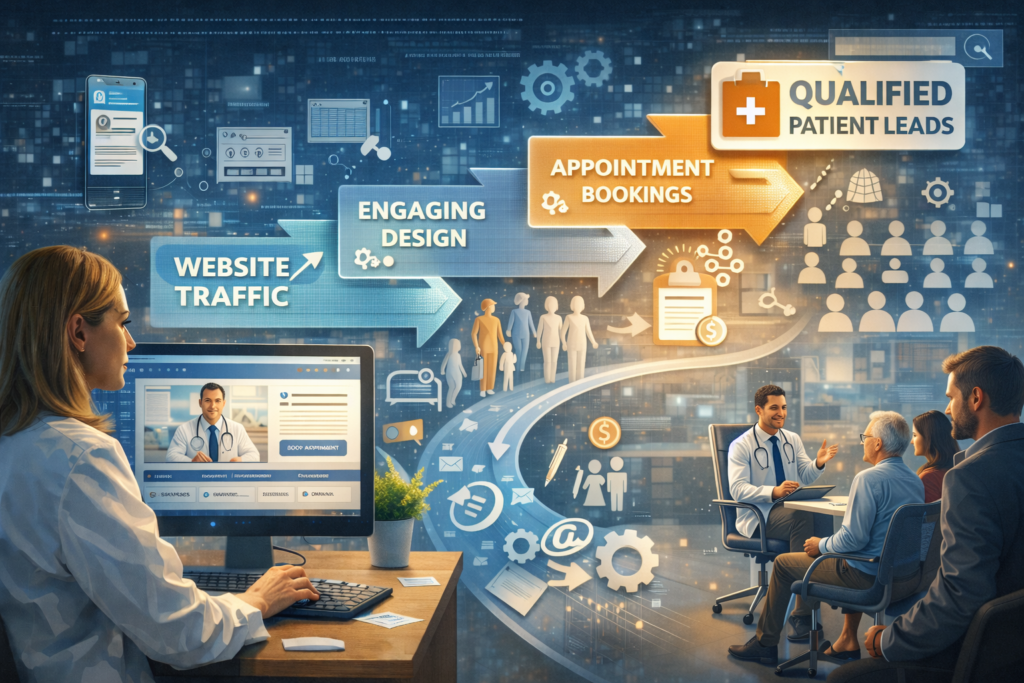
SEO and conversion work better when they are built together
One of the biggest mistakes in healthcare web strategy is optimizing for traffic without thinking about what happens after the click.
Traffic by itself does not mean much. What matters is relevance.
A page can attract visitors, but if the content does not match intent, explain the value clearly, or offer a natural next step, those visits rarely become qualified leads. Google’s guidance around AI search makes this even more important because users are asking longer, more specific questions and expecting pages that truly fulfill those needs.
That is why strong lead generation for healthcare providers usually comes from pages that combine four things well:
- search intent alignment
- useful and easy-to-scan content
- trust-building design elements
- low-friction conversion paths
When those pieces work together, the site starts attracting better-fit visitors instead of just more visitors.
What BEACON should prioritize on high-intent pages
If the goal is to turn design into qualified patient leads, some page elements matter more than others.
Here are the practical priorities that tend to make the biggest difference:
- a headline that mirrors what the visitor is actually looking for
- a short opening section that explains who the page is for
- scannable subheads instead of long walls of text
- one primary call to action, not five competing ones
- supporting trust elements near key decision points
- fast loading speed on mobile
- clear service explanations without jargon
- forms that ask only for necessary information
- internal links that help users continue their journey
- updated content that reflects current services and patient needs
These details may seem simple, but together they create momentum. And momentum is what drives conversion.
Why fewer, stronger pages usually outperform bloated websites
More pages do not automatically mean better performance.
In fact, too many weak pages can make a healthcare site feel repetitive and hard to navigate. A better strategy is to focus on quality, intent, and structure. Google has repeatedly pointed site owners toward unique, non-commodity content and strong usability instead of content created mainly to manipulate rankings.
For BEACON, that means building pages that actually earn attention:
- service pages with substance
- landing pages built for specific search intent
- educational content that answers real patient questions
- location pages only where they add actual value
- conversion paths that feel natural instead of forced
That kind of site architecture tends to produce better leads because it respects how real people search and decide.
Final Thoughts
A strong website should do more than attract attention. It should build confidence, reduce uncertainty, and help the right visitors take the next step without hesitation.
That is the real shift in 2026. Success is not about getting random clicks and hoping some of them convert. It is about creating a digital experience that feels clear, useful, and trustworthy from the very first interaction. For BEACON, the biggest opportunity is to treat website design as a real growth tool, one that supports search visibility and patient decision-making at the same time.