
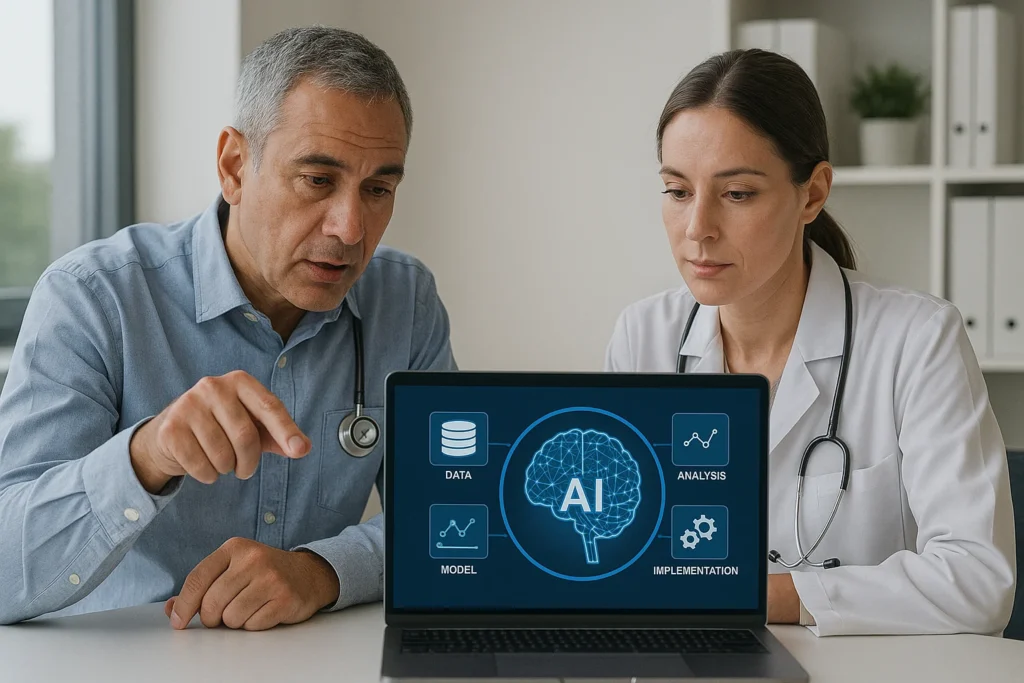
Artificial intelligence is transforming the way medical organizations operate. Understanding how to integrate AI in healthcare effectively can improve patient outcomes, streamline workflows, and enhance decision-making. From administrative processes to clinical applications, this guide provides a structured approach for clinics and providers looking to leverage intelligent technologies.
Why AI Matters in Modern Healthcare
The healthcare industry is rapidly embracing technology to enhance efficiency and quality of care. Digital transformation in healthcare is no longer optional—it is essential for staying competitive. Artificial intelligence enables:
- Faster diagnosis through predictive analytics
- Improved patient monitoring and personalized treatment
- Streamlined administrative processes
- Enhanced healthcare data management
By adopting AI thoughtfully, organizations can not only improve operational performance but also deliver a more patient-centered experience.
Step 1: Identify Opportunities for AI Integration
Before deploying any technology, it’s crucial to evaluate areas where AI tools for doctors can have the most impact. Common opportunities include:
- Clinical Decision Support – Tools that analyze patient data to suggest potential diagnoses or treatment plans.
- Predictive Analytics – Using historical data to identify patients at risk and prevent adverse outcomes.
- Administrative Automation – Streamlining scheduling, billing, and record-keeping tasks.
- Patient Engagement – Chatbots and virtual assistants for appointment reminders or answering common questions.
Analyzing workflows and identifying pain points ensures AI implementation is strategic and effective.
Step 2: Choose the Right AI Tools
Selecting appropriate platforms is critical. Look for technologies that are compatible with existing systems and comply with healthcare regulations. Some examples include:
- Machine learning algorithms for imaging and diagnostics (AI healthcare examples)
- Natural language processing tools to streamline documentation
- Telehealth platforms enhanced with AI-driven triage and analytics (telehealth technology)
- Cloud-based solutions for healthcare data management
Evaluating performance, usability, and integration capabilities ensures the chosen tools deliver measurable benefits.
Step 3: Prepare Your Team
Implementing intelligent systems requires a prepared workforce. Training staff in AI capabilities ensures smooth adoption and reduces resistance. Key steps include:
- Conducting workshops to familiarize providers with AI functionalities
- Sharing case studies and practical AI healthcare examples
- Encouraging collaboration between IT teams and clinical staff
- Establishing champions to guide peers through new workflows
Empowering your team creates a culture of innovation and trust around technology adoption.
Step 4: Integrate AI into Clinical Workflows
Seamless integration is essential for maximizing impact. Best practices for embedding AI include:
- Mapping existing processes and identifying integration points
- Using AI tools for doctors to augment, not replace, clinical decision-making
- Ensuring interoperability with electronic health records (EHRs)
- Continuously monitoring outcomes to refine workflows
When implemented carefully, AI enhances efficiency without disrupting patient care.
Step 5: Monitor, Evaluate, and Optimize
Continuous improvement is key to successful adoption. Organizations should:
- Track performance metrics and patient outcomes
- Collect feedback from providers and patients
- Adjust algorithms and processes based on real-world results
- Stay updated on emerging technologies in digital transformation in healthcare
Ongoing evaluation ensures AI solutions remain effective and aligned with organizational goals.
Real-World Applications and Success Stories
There are numerous AI healthcare examples demonstrating transformative impact:
- Predictive analytics models reducing hospital readmissions
- AI-driven imaging platforms identifying early-stage diseases with high accuracy
- Chatbots improving patient communication and engagement
- Remote monitoring systems integrated with telehealth technology enhancing chronic disease management
These applications illustrate how intelligent systems can improve both operational efficiency and patient outcomes.
Preparing for the Future of Healthcare Technology
The future of healthcare will increasingly rely on artificial intelligence and other advanced technologies. Clinics and providers should focus on:
- Investing in scalable AI tools for doctors
- Building robust infrastructure for healthcare data management
- Encouraging a culture of innovation and continuous learning
- Leveraging AI to enhance—but never replace—the human aspects of care
By preparing proactively, organizations can ensure sustainable, long-term success.
Conclusion
Implementing intelligent systems requires thoughtful planning, collaboration, and ongoing evaluation. When done correctly, it can streamline operations, enhance decision-making, and improve overall patient experiences. The integration of technology into healthcare workflows represents an opportunity to create more efficient, responsive, and compassionate services for everyone involved.