

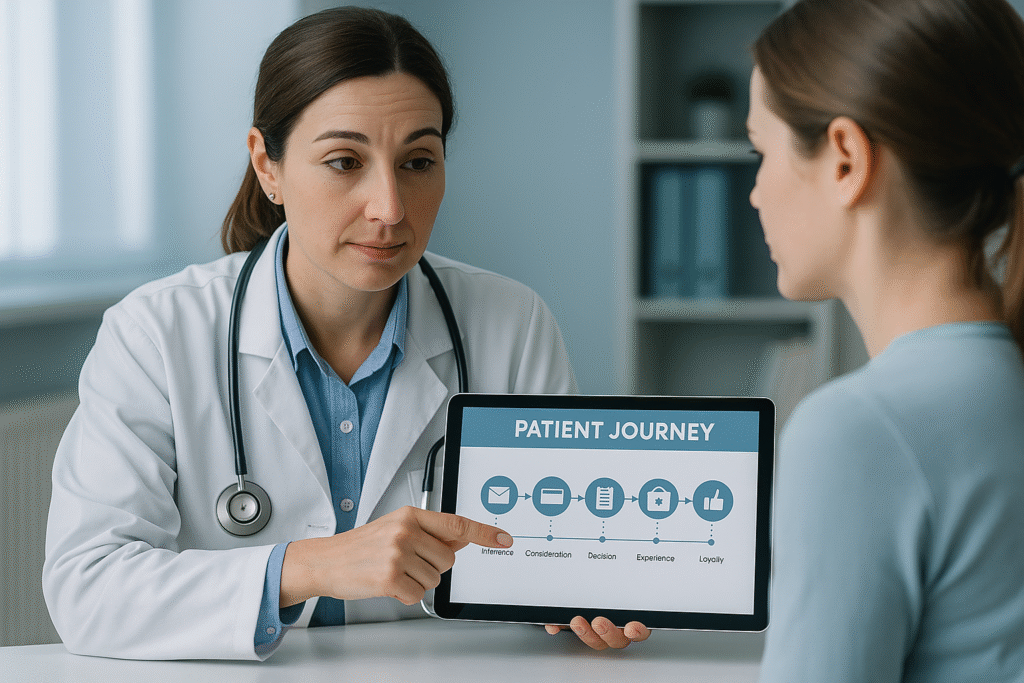
Patient journey mapping is a visual representation of the various stages a patient goes through when interacting with healthcare providers. It includes every touchpoint, from the initial awareness of a healthcare service to post-treatment follow-ups. By mapping the journey, healthcare providers can identify opportunities to enhance patient engagement and improve the overall patient experience.
What is Patient Journey Mapping?
Patient journey mapping involves creating a detailed diagram that outlines the process a patient undergoes when interacting with healthcare services. This process includes both physical interactions like consultations and digital interactions such as online research. The goal is to provide a comprehensive view of a patient’s experience, highlighting areas that work well and those needing improvement.
Components of a Patient Journey Map
A patient journey map typically consists of several components: stages of the journey, touchpoints, emotions, pain points, and opportunities for improvement. By examining these components, healthcare providers can gain insights into patient experiences and identify areas where they can enhance service delivery. This comprehensive understanding is essential for creating a seamless patient experience.
Benefits of Patient Journey Mapping
The benefits of patient journey mapping extend beyond improved patient experiences. It allows healthcare providers to streamline operations, improve patient satisfaction, and foster better patient-provider relationships. Moreover, by identifying pain points and areas for improvement, healthcare organizations can allocate resources more efficiently, ultimately leading to better health outcomes.
Why Patient Journey Mapping Matters
In the competitive world of healthcare, understanding the patient’s journey is vital for several reasons:
Improved Patient Engagement
Patient engagement is crucial for successful treatment outcomes. By knowing each step a patient takes, healthcare providers can tailor their communication and services to meet patient needs effectively. This personalized approach not only improves patient satisfaction but also encourages patients to be active participants in their healthcare journey.
Enhanced Patient Experience
Identifying pain points allows providers to address issues promptly, thus enhancing the overall experience. When healthcare providers understand the challenges patients face, they can implement targeted solutions to alleviate these issues, resulting in a more positive healthcare experience. This proactive approach can significantly improve patient loyalty and retention.
Informed Healthcare Marketing Strategy
With detailed insights into patient behavior, healthcare marketers can craft more targeted and effective marketing campaigns. By understanding what patients value and need, healthcare organizations can develop marketing strategies that resonate with their audience, thereby increasing engagement and conversion rates. This data-driven approach is essential for staying competitive in the healthcare industry.
Key Stages in the Patient Journey
Understanding the key stages in the patient journey is crucial for effective mapping. These stages typically include:
Awareness
The patient becomes aware of a healthcare service or provider. This stage is often the first point of contact and can occur through various channels such as online searches, advertisements, or word-of-mouth recommendations. Ensuring a strong presence across these channels is essential for capturing patient interest.
Consideration
The patient evaluates their options and considers engaging with a provider. During this stage, patients often compare different healthcare services, looking at factors such as cost, convenience, and reputation. Providing clear and concise information can help patients make informed decisions and choose your services over competitors.
Decision
The patient decides to proceed with a particular healthcare provider. This decision is influenced by previous interactions and the perceived value of the healthcare service. Ensuring a smooth and hassle-free process at this stage is crucial for converting potential patients into actual ones.
Treatment
The patient undergoes treatment or consultation. This stage involves direct interaction with healthcare providers and is critical for establishing trust and rapport. Providing high-quality care and addressing patient concerns effectively can enhance the overall treatment experience.
Post-Treatment
The patient engages in follow-up care and feedback. Post-treatment interactions are vital for ensuring long-term patient satisfaction and loyalty. By providing ongoing support and addressing any lingering concerns, healthcare providers can foster strong patient relationships and encourage positive word-of-mouth referrals.
How to Create a Patient Journey Map
Creating a patient journey map involves several steps. Here’s a simplified guide to get you started:
Step 1: Gather Patient Data
The first step in creating a patient journey map is to gather data. This includes information from patient surveys, feedback forms, social media interactions, and healthcare records. The more data you collect, the clearer your understanding of the patient journey will be. Analyzing this data can reveal patterns and insights that are crucial for mapping the patient journey accurately.
Step 2: Identify Touchpoints
Identify every interaction a patient has with your healthcare service. This includes online research, phone calls, appointments, and any other points of contact. Understanding touchpoints helps in mapping out the journey accurately. Each touchpoint presents an opportunity to enhance patient experience, making it essential to evaluate their effectiveness continuously.
Step 3: Map the Patient Journey
Using the data and identified touchpoints, create a visual map. This map should illustrate the patient’s journey from start to finish, highlighting key stages and experiences. Visual representation helps in understanding complex processes and identifying areas for improvement. Regularly updating the map ensures it remains relevant and reflective of current patient experiences.
Step 4: Analyze and Optimize
Once the map is complete, analyze it to identify any gaps or pain points. Use this analysis to optimize the patient journey, ensuring a seamless experience across all channels. Implementing changes based on these insights can improve patient satisfaction and operational efficiency, ultimately leading to better healthcare outcomes.
Leveraging Multichannel Healthcare Marketing
To create a truly seamless experience, healthcare providers must engage patients across multiple channels. This includes:
Digital Channels
Digital channels such as websites, social media, email, and mobile apps play a pivotal role in patient engagement. These platforms offer opportunities to provide valuable information, engage with patients, and gather feedback. Healthcare providers can use these channels to reach a wider audience and offer personalized experiences that resonate with individual patient needs.
Traditional Channels
Despite the rise of digital technology, traditional channels like in-person consultations, phone calls, and print media remain important. These channels provide a personal touch that is crucial for building trust and rapport with patients. By integrating traditional and digital channels, healthcare providers can offer a comprehensive and cohesive patient experience.
Integrating Digital Healthcare Marketing
Digital marketing plays a vital role in patient engagement. Here are some strategies to consider:
- SEO-Optimized Content: Create valuable content that ranks well in search engines to increase visibility. This content should address patient concerns and provide solutions, establishing your organization as a trusted source of information.
- Social Media Engagement: Use social media platforms to interact with patients and share informative content. Engaging with patients on social media can foster a sense of community and encourage open communication.
- Email Campaigns: Send personalized email updates to keep patients informed and engaged. Tailoring messages to individual patient needs can enhance the relevance and effectiveness of your communication efforts.
Importance of Consistent Healthcare Branding
Consistent branding across all channels reinforces trust and reliability. Ensure that your messaging, tone, and visuals are uniform across digital and traditional platforms. This consistency helps in building a strong brand presence and fosters patient loyalty. A cohesive brand identity makes it easier for patients to recognize and relate to your healthcare services.
Patient Engagement Strategies
Effective patient engagement is at the heart of a successful patient journey. Here are some strategies to enhance engagement:
Personalized Communication
Tailor your communication to address individual patient needs and preferences. Personalization can enhance patient satisfaction by making interactions more relevant and meaningful. Utilize patient data to create customized messages that resonate with individual experiences and expectations.
Feedback Mechanisms
Implement systems to gather patient feedback and use it to improve services. Feedback provides valuable insights into patient experiences and areas for improvement. Regularly soliciting and acting on patient feedback demonstrates a commitment to quality care and continuous improvement.
Educational Resources
Provide patients with access to educational materials to empower them in their healthcare journey. Educating patients can lead to better health outcomes by enabling them to make informed decisions. Offer resources such as webinars, articles, and workshops to enhance patient knowledge and engagement.
Journey Mapping Tools
Several tools can aid in the patient journey mapping process:
Customer Relationship Management (CRM) Software
CRM software helps in managing patient interactions and data. It provides a centralized platform for tracking patient journeys, enabling healthcare providers to deliver personalized and efficient care. CRM systems can also integrate with other tools to enhance data accuracy and accessibility.
Journey Mapping Software
Journey mapping software provides templates and features to create detailed journey maps. These tools offer visualization capabilities that make it easier to understand complex patient journeys and identify improvement opportunities. Investing in journey mapping software can streamline the mapping process and enhance its effectiveness.
Analytics Tools
Analytics tools offer insights into patient behavior and preferences. These tools can analyze large datasets to uncover trends and patterns that inform patient journey mapping. By leveraging analytics, healthcare providers can make data-driven decisions that enhance patient experiences and operational efficiency.
Conclusion
Patient journey mapping is an indispensable tool for healthcare providers aiming to enhance patient engagement and create a seamless multichannel experience. By understanding the patient’s journey, healthcare organizations can optimize their services, improve healthcare branding, and develop effective healthcare marketing strategies.
Implementing these strategies not only improves patient satisfaction but also strengthens the overall healthcare experience, ensuring patients receive the best care possible at every touchpoint of their journey. Embracing patient journey mapping can transform healthcare delivery, fostering a patient-centered approach that prioritizes quality and satisfaction.